
Do You Still Have to Boil Water in Mexico?
Boiling solves one problem and does nothing about three others. Here is exactly what it does, what it misses, and when it is the wrong tool.
Boiling kills what is alive in the water. It does nothing about what is dissolved in it.
That single distinction answers most of the confusion around this question, and it is the reason two people can both be right when one says boiling is enough and the other says it is useless.
What boiling does
It kills bacteria, viruses and protozoa. A rolling boil for one minute is the standard advice and it works. That covers the main risk here, which is contamination from storage rather than from the treatment plant.
If your only concern is getting sick from something living in the water, boiling handles it, and it costs nothing but gas and time.
What boiling does not do
Dissolved solids. Salts, minerals, nitrates. Boiling does not remove them. It makes them worse, because water evaporates and the dissolved content stays behind in a smaller volume. Boil a litre down to half and you have doubled the concentration of everything dissolved in it.
Heavy metals. Lead, arsenic, mercury. Same problem, and boiling concentrates them.
Chlorine and taste. Some chlorine does come off with boiling. The flat, dull taste of boiled water is not an improvement, it is what water tastes like with the dissolved gases driven out of it.
Hardness. Boiling makes the scale in your kettle. It does not soften the water.
When boiling is the right answer
You are visiting for a week. There is an outage and you are drawing from a pipa delivery you know nothing about. You are camping. The system is down and you need water tonight.
In all of those, boil it.
When it is the wrong answer
You live here. Boiling is a daily task that has to be done correctly every time by whoever happens to be in the kitchen, forever. It is the household chore that gets skipped first when everyone is busy, and it never gets skipped on the day it mattered.
And if the issue with your water is TDS rather than bacteria, which is common near the coast where seawater has worked into the aquifer, boiling actively makes it worse.
What actually replaces it
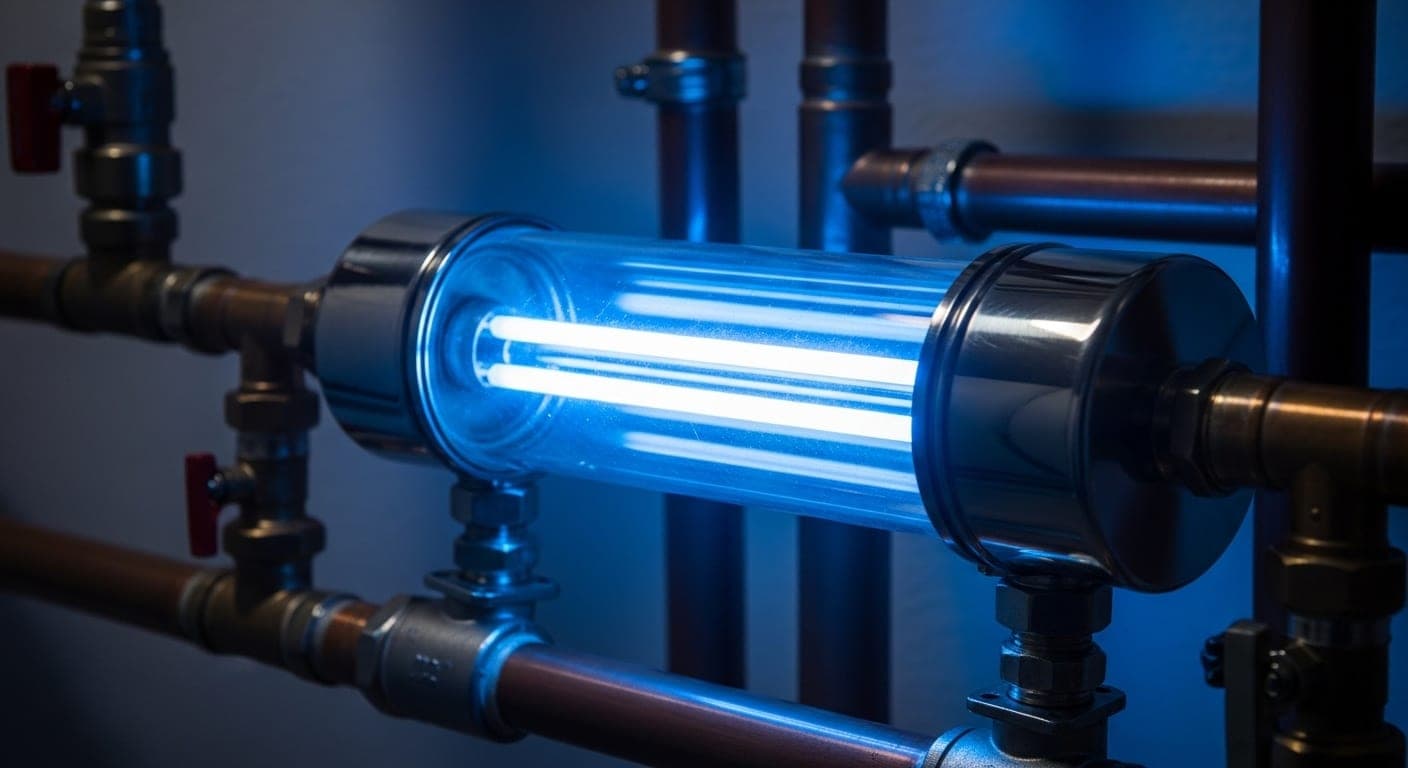
Ultraviolet does what boiling does, continuously and without anyone remembering. Water passes the lamp on the way into the house and bacteria and viruses are dealt with at every tap.
Reverse osmosis handles the part boiling never could: dissolved solids, heavy metals and nitrates, at the drinking tap.
Between them, nobody has to boil anything, and nobody has to remember.
Finding out which problem you have
The two problems need different answers, and you cannot tell which you have by looking at the water. We test it free at your house and give you the numbers.
Frequently asked questions
- Is boiling tap water enough in Mexico?
- It kills bacteria, viruses and protozoa. It does nothing about dissolved solids, heavy metals or hardness, and it concentrates them.
- How long should I boil water?
- A rolling boil for one minute is the standard advice. Do not boil it dry, because everything dissolved stays behind in less water.
- Does boiling remove chlorine?
- Some comes off. The flat taste of boiled water is dissolved gases being driven out, not an improvement.
- What replaces boiling permanently?
- Ultraviolet does what boiling does, continuously and without anyone remembering. Reverse osmosis handles what boiling never could.
Want clean water in your home?
Book a free water test. We'll tell you exactly what your home needs — no obligation.
Get a Free Water Test