
Why Does My Coffee Taste Bad in Baja?
Same beans, same machine, different country, worse coffee. It is the water, and the fix is not what most people try first.
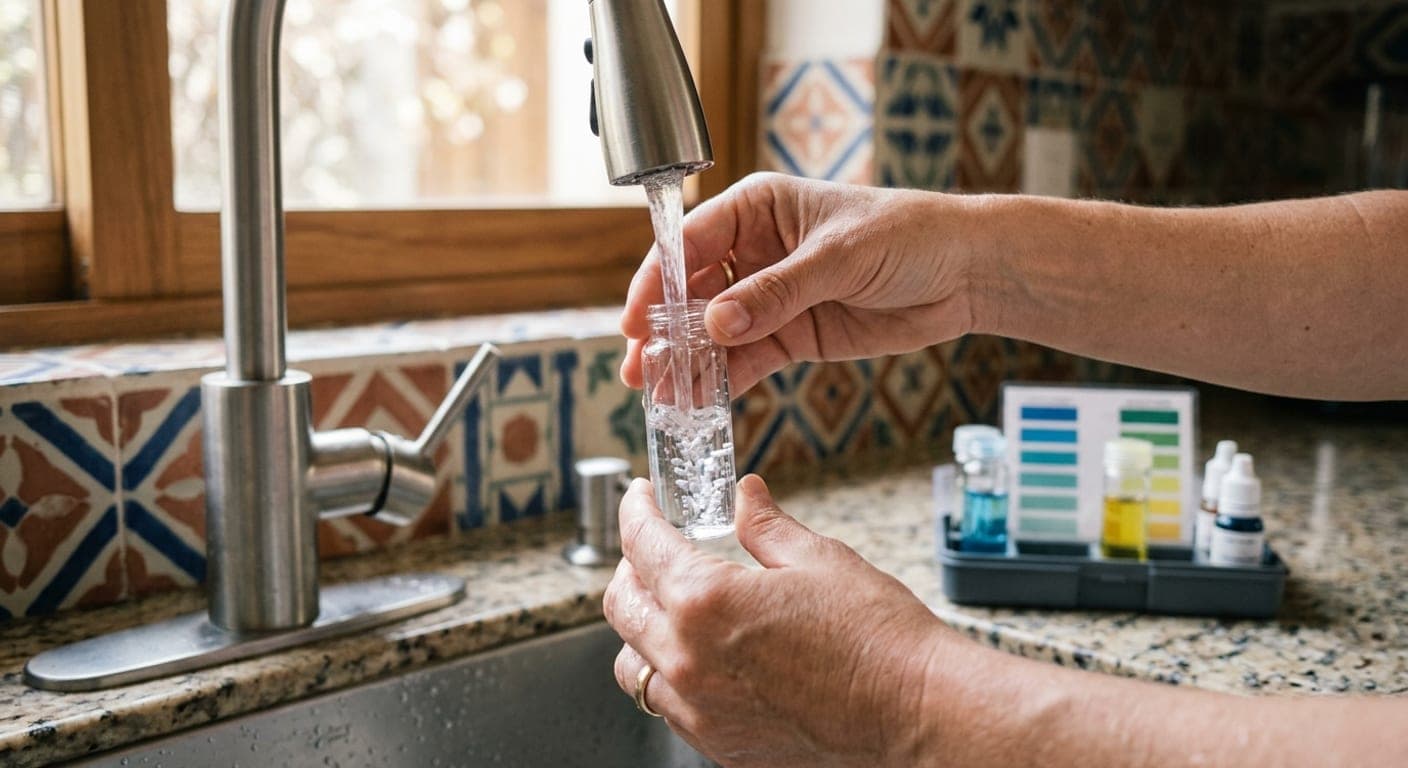
Coffee is about 98% water. Change the water and you have changed the coffee.
People bring their grinder, their beans and their machine, set it all up exactly as it was at home, and the coffee is flat, or chalky, or slightly metallic. Then they buy different beans. Then a different grinder. It is the water.
The two things in Baja water that ruin coffee
Chlorine. Municipal water is chlorinated and the level changes through the year. Chlorine has a smell and a taste, and hot water releases both. It is the harsh, faintly chemical edge on the first sip. It also flattens aroma, which is most of what you taste.
Hardness. Dissolved calcium and magnesium. A little is genuinely good, because minerals help extract flavour compounds from the grounds and water with nothing in it makes hollow, thin coffee. Too much and extraction goes wrong: the cup goes chalky and dull, and the acidity that makes a good bean interesting disappears.
Baja water is well past the point of a little.
The scale in your machine
The same minerals build up inside the machine. Scale coats the heating element and narrows the water path, so the temperature drifts and the flow rate changes, and the machine brews worse each month while you slowly get used to it.
If you are descaling an espresso machine every few weeks here, that is your water telling you something.
What people try first, and why it does not work
The filter in the water tank of a home machine, or the carbon filter in the fridge, handles chlorine. That is a real improvement and it is why people say it helped a bit.
Neither touches hardness. So the harsh chlorine edge goes and the chalky dullness stays, and people conclude the water is fine and blame the beans again.
What actually fixes it
For drinking and brewing water, reverse osmosis. It removes the dissolved solids, and coffee made with RO water tastes like the beans rather than like the tap.
One thing worth knowing: pure RO water is very low in minerals, and some people find coffee made with it thin. Our systems include an alkaline remineralization stage that puts calcium and magnesium back in at a low level, which is closer to what a coffee person would specify anyway.
For the machine itself, a softener protects it from scale, and that is a different job from making the cup taste better.
The cheapest test you can run
Buy a garrafón, make a cup with it, make a cup with the tap, drink them side by side. If the difference is obvious, it was never the beans.
Then, if you want to know exactly what your tap is carrying, we test it free at your house and give you the TDS and hardness numbers.
Frequently asked questions
- Why does coffee taste different in Mexico?
- Coffee is about 98 percent water. Chlorine adds a harsh edge and hard water minerals make the cup chalky and flat.
- What water is best for coffee?
- Water with a low mineral load but not zero. Reverse osmosis with an alkaline remineralization stage is close to what a coffee specialist would ask for.
- Will a fridge filter improve my coffee?
- It removes chlorine, which helps. It does nothing about hardness, which is the other half of the problem.
- Why do I have to descale my machine so often here?
- Hard water. The minerals build up on the heating element and in the water path. A softener protects the machine.
Want clean water in your home?
Book a free water test. We'll tell you exactly what your home needs — no obligation.
Get a Free Water Test