Water Quality in Baja California: What Expats Need to Know
A practical water-quality guide for expats in Baja California — is the water safe to drink, what a home filter does, and how to set up clean water fast.
Moving to Baja California means learning a new relationship with your water. It's not scary once you understand it, but it's genuinely different from what you're used to in the US or Canada — and getting a few basics right early saves you money, appliances, and hassle. Here's the practical version, without the fear-mongering.
The one thing to understand first
In Baja, there's a working distinction between water for washing and water for drinking. The tap water that reaches your home is generally acceptable for showering, laundry, and cleaning. For drinking and cooking, locals don't use it untreated — they use refillable 20-liter bottles called garrafones, or they filter their water at home.
This isn't unique paranoia. It's the standard, sensible habit across Mexico, and once you adopt it, day-to-day life is completely normal.
Why the tap water isn't drinking water
The municipal supply is chlorinated when it's treated, but two things happen after that:
- Distribution. Water moves through aging pipes across long distances. Repairs, pressure drops, and old infrastructure can introduce sediment and contamination along the way.
- Home storage. Most Baja homes store water in a rooftop tinaco and/or an underground aljibe (cistern), because supply can be intermittent. Water sits in these tanks, chlorine dissipates, and sediment and biofilm can build up if the tank isn't cleaned periodically.
By the time water reaches your faucet, you can't personally verify what happened at every step. That uncertainty — not a single proven poison — is why treating or bottling your drinking water is the safe default. Clear water can still hide bacteria or dissolved contaminants, a point we cover in how to know if your water is safe.
The second thing expats notice: hard water
Beyond the drinking question, many people are surprised by hard water — water high in dissolved calcium and magnesium. You'll recognize it by the white, crusty scale on faucets, showerheads, and glassware, and by soap that doesn't lather well.
Hard water isn't a health hazard, but it's an equipment killer. Scale builds up inside water heaters, washing machines, and coffee makers, shortening their life and driving up energy use. If you own your home, a water softener is often the highest-return upgrade you can make, protecting everything downstream.
What a home setup actually looks like
There's no single "expat water system" — it depends on your water and your home. But most setups are some combination of:
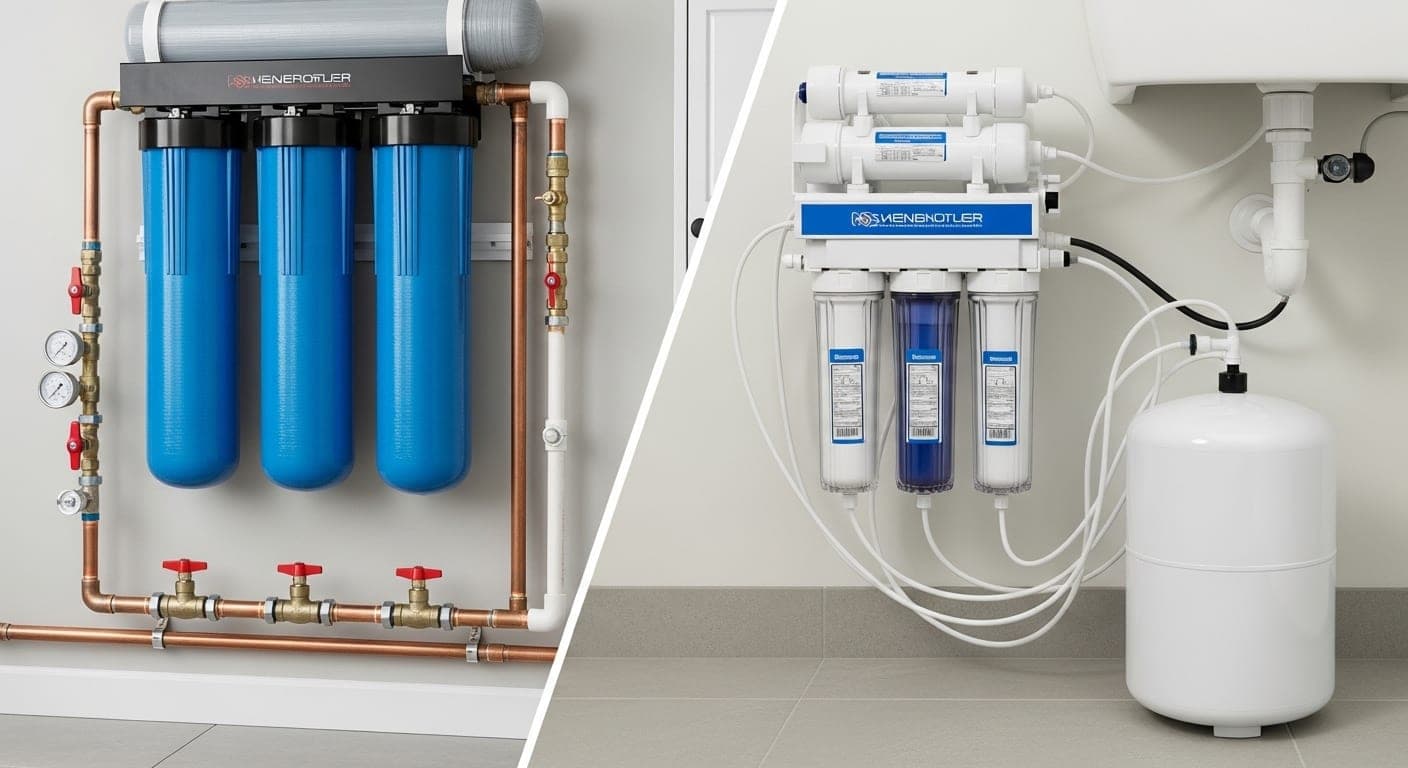
- Reverse osmosis at the kitchen sink for drinking and cooking water. A reverse osmosis system removes dissolved solids, heavy metals, and many chemicals, giving you unlimited filtered water from a dedicated tap — no more hauling garrafones. If you're weighing this against whole-house treatment, our guide on whole-house versus under-sink filtration breaks down which you actually need.
- A whole-house filter to improve every tap — reducing chlorine, sediment, and odors so showers, laundry, and appliances all get cleaner water. The premium tiers also reduce PFAS and heavy metals.
- A water softener if hardness is high, to protect appliances and plumbing.
- UV sterilization as a final safeguard against bacteria, which we explain in how UV water filters work.
If you're renting for a few months, garrafones plus a simple pitcher filter may be all you need. If you own or plan to stay, an installed system quickly beats the bottle routine on both cost and convenience.
Start with a free water test
The right setup depends entirely on your specific water and home, so the first step is knowing what you actually have. Our free in-home water test comes to your home anywhere from Rosarito to Ensenada and Valle de Guadalupe, and measures your water on the spot — TDS, hardness, pH, chlorine, turbidity, UV transmittance, and a coliform screen.
Book your free water test, or reach us on WhatsApp at 664 337 7023. We'll tell you exactly what your home needs — and what it doesn't. No cost, no obligation.
Frequently asked questions
- Is Baja California water safe to drink?
- Municipal water in Baja California is chlorinated at the source but is not treated as drinking water once it has passed through the distribution network and home storage tanks. For drinking and cooking, residents use bottled garrafones or a home filter such as reverse osmosis. Tap water is fine for showering, washing, and cleaning.
- Do I need a water filter as an expat in Mexico?
- If you're renting short-term, garrafones are the simplest option. If you own or plan to stay, a filter usually pays off in convenience and cost — a reverse osmosis unit gives unlimited drinking water without hauling bottles, and a whole-house filter protects appliances and improves every shower. A free water test shows which you need.
- Why is the water hard in Baja California?
- Much of Baja's water is high in dissolved minerals like calcium and magnesium, which is what 'hard water' means. Hard water leaves white scale on fixtures, shortens the life of water heaters and appliances, and makes soap less effective. A water softener addresses hardness specifically; a filter addresses chlorine, sediment, and contaminants.
- What's the difference between a water softener and a water filter?
- A water softener removes hardness minerals (calcium and magnesium) that cause scale. A filter removes chlorine, sediment, tastes, odors, and — depending on the media — contaminants like PFAS and heavy metals. Many Baja homes benefit from both: a softener to protect equipment and a filter for clean, good-tasting water.
Want clean water in your home?
Book a free water test. We'll tell you exactly what your home needs — no obligation.
Get a Free Water Test