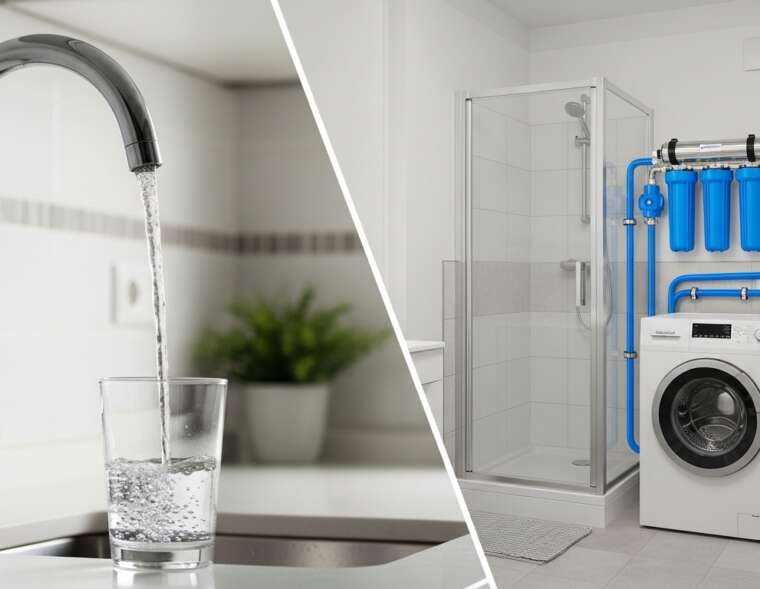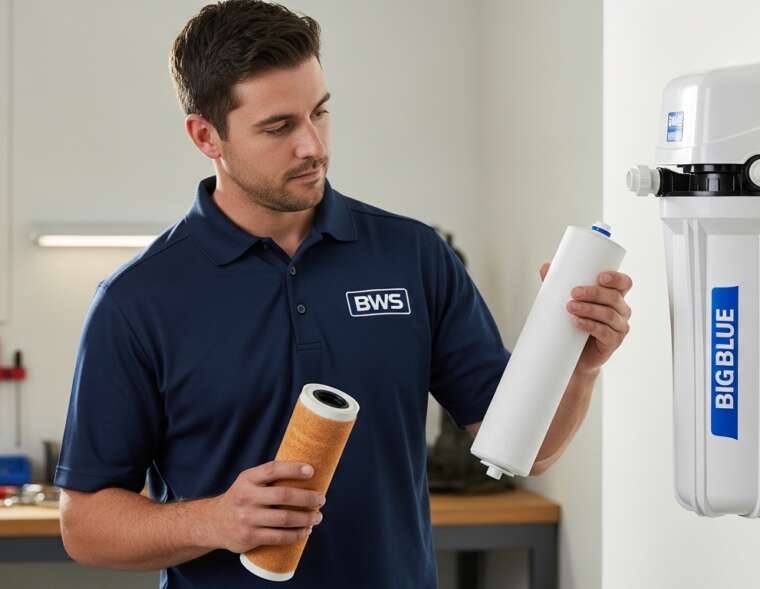

A carbon filter is one of the best investments you can make for your water quality. It removes chlorine, chloramines, sediment, and the taste and odor problems that make tap water unpleasant in most of Baja. But there’s one thing it cannot do: kill bacteria and viruses.
In Baja California, that matters more than it does in most US cities — and here’s why.
The Cistern Problem
Most homes in Rosarito and the surrounding area store water in a ground-level cistern or rooftop tinaco before it’s pumped to fixtures. These tanks are essential for managing inconsistent municipal supply, but they create a vulnerability that most homeowners underestimate.
Even a well-maintained cistern can be compromised by a cracked lid, roof debris washed in during rain, algae growth, or infrequent cleaning. When contamination enters a cistern, chlorine from the municipal supply — which was already partially depleted by the time it arrived — may not be sufficient to disinfect the stored volume.
The result is water that passes through your carbon filter perfectly and arrives at your tap clean, clear, and free of chlorine taste — but potentially containing coliform bacteria or other microorganisms.
What UV Sterilization Does
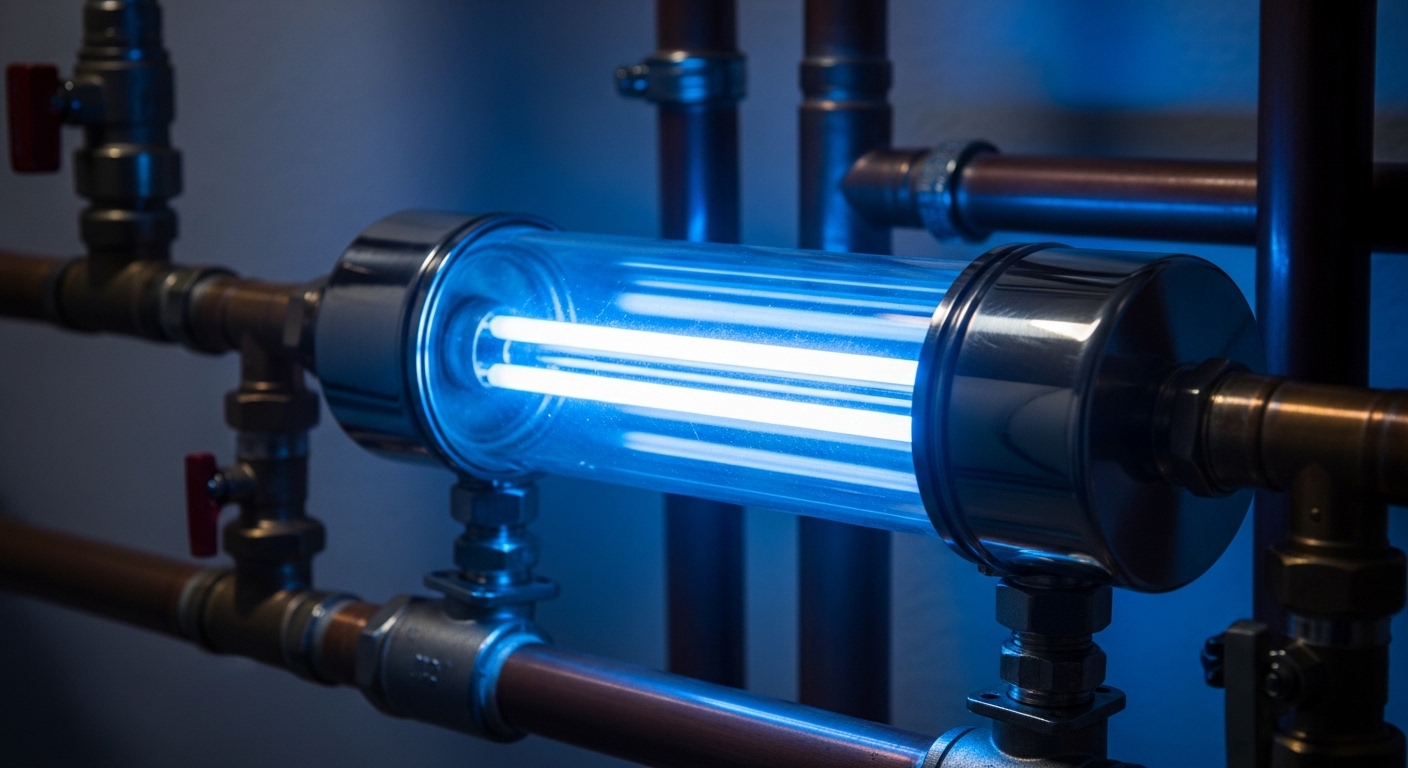
A UV sterilizer is a stainless steel chamber with a quartz-sleeved ultraviolet lamp at its core. Water passes through the chamber and is exposed to UV-C light at a wavelength that disrupts the DNA of bacteria, viruses, and protozoa — rendering them unable to reproduce and harmless.
At a properly sized dose (around 40 mJ/cm² for residential applications), UV sterilization eliminates 99.99% of bacteria and viruses without adding any chemicals to your water and without affecting taste or pH.
It’s the final stage of every whole-house system we install, and it’s non-negotiable for homes with cisterns.
The Order Matters
UV sterilization only works correctly if the water reaching the lamp is already clear. Turbidity and sediment block UV light and allow microorganisms to hide in particle shadows. This is why the sequence in any properly designed system is always: sediment filter → carbon filter → UV sterilizer.
We size the UV unit based on your home’s peak flow rate and the UV transmittance of your water, measured during our initial test. A system sized too small for your flow rate won’t deliver the required dose — and will give you a false sense of security.
Bottom Line
If your home has a cistern or tinaco — and most in Baja do — UV sterilization is not optional. Carbon filtration gives you water that tastes good. UV gives you water that’s actually safe. You want both.