
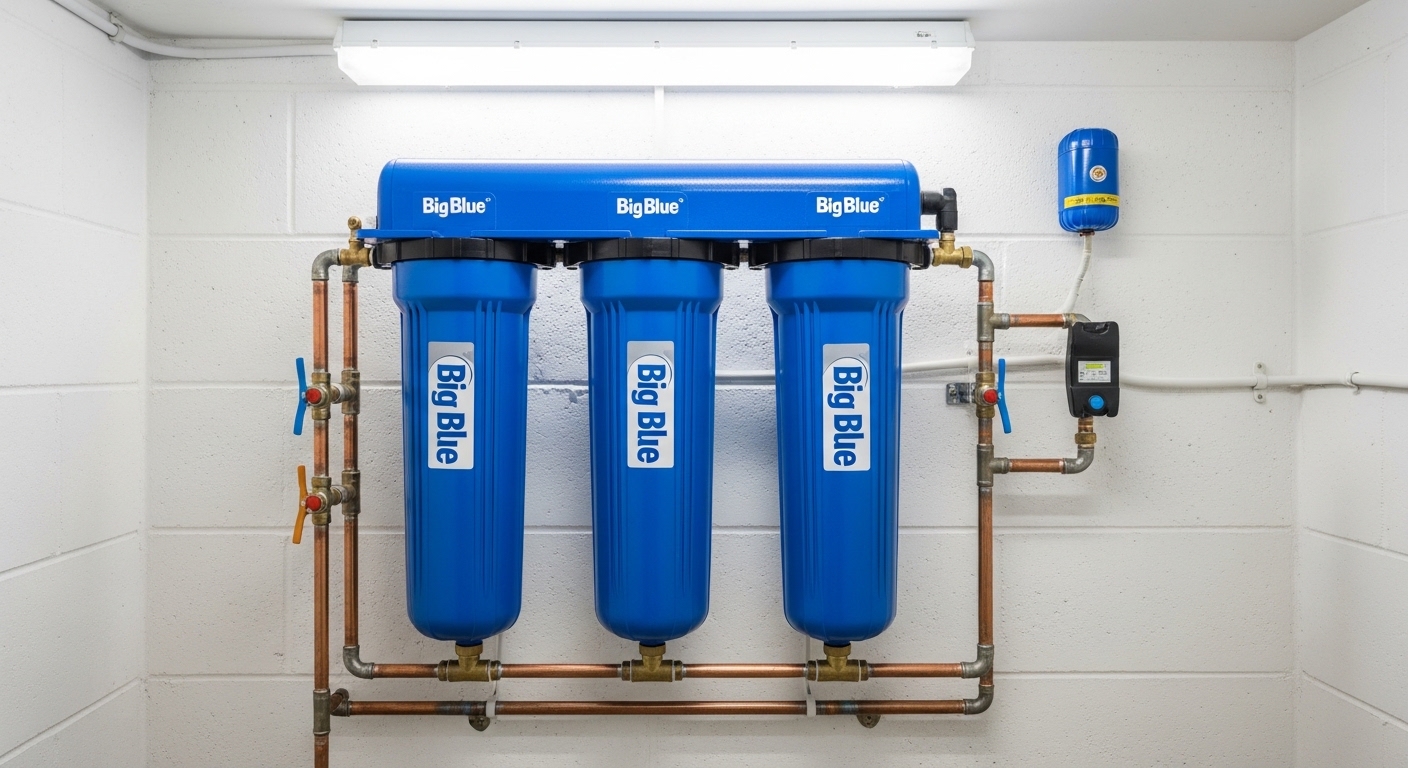

Walk into any hardware store in Rosarito or order online and you’ll find dozens of whole-house water filter options at wildly different price points. Most of them will work — for a while — but ‘works for a while’ isn’t the same as ‘right for your home.’
Here’s how to think through the selection correctly.
Start With Flow Rate
The most common mistake is buying a system sized for a small home and installing it in a large one. Every filter housing and UV sterilizer has a maximum flow rate — the gallons per minute it can process while still delivering effective filtration.
For a 2-3 bathroom home in Rosarito running on city supply, you typically need a system rated for 12-15 GPM. Undersizing creates pressure drop throughout the house and — critically — reduces the UV dose delivered to water moving too quickly through the sterilizer chamber.
We calculate your peak demand based on the number of fixtures and occupancy before specifying any system.
Good, Better, Best — What the Tiers Actually Mean
Good: Three-Stage Big Blue Rack
A 20-inch Big Blue three-stage system with a 5-micron sediment filter, catalytic carbon block for chlorine and chloramine removal, and a 1-micron polish stage, followed by a 12 GPM UV sterilizer. Suitable for most 2-3 bathroom homes on municipal supply with cistern, provided UVT is above 85%.
Better: Integrated Rack With Spin-Down Pre-Filter
The same filtration stages with the addition of a reusable spin-down sediment pre-filter before the main housings. This catches large particles before they load the cartridges, extending service life significantly. Better for homes with older cisterns or any visible sediment in the water.
Best: Media Carbon Tank
Instead of carbon block cartridges, a media carbon tank (GAC/KDF) handles chlorine and chloramine removal with a much longer service life — typically years rather than months. Combined with a 1-micron carbon polish and a high-flow UV unit, this is the right choice for full-time residents, larger homes, or anyone who wants to minimize the maintenance burden on carbon filtration.
The Stages That Are Never Optional
Regardless of which tier fits your budget and usage, two stages are non-negotiable for Baja conditions: a sediment stage before carbon, and UV sterilization after carbon. Skipping sediment lets particles load your carbon cartridge prematurely. Skipping UV means your system removes chlorine — the only disinfectant in your water — without replacing it with anything else. That’s worse than no system at all.
What Your Test Results Decide
If your UVT is below 85%, you need additional filtration before the UV stage or a higher-powered UV unit rated for lower transmittance. If hardness is above 7-10 GPG, we’ll flag that an anti-scale system should be considered before it damages the UV lamp quartz sleeve. If coliform is detected, we address the source before sizing anything.
The right system is the one designed around your actual water. Everything else is guessing.
