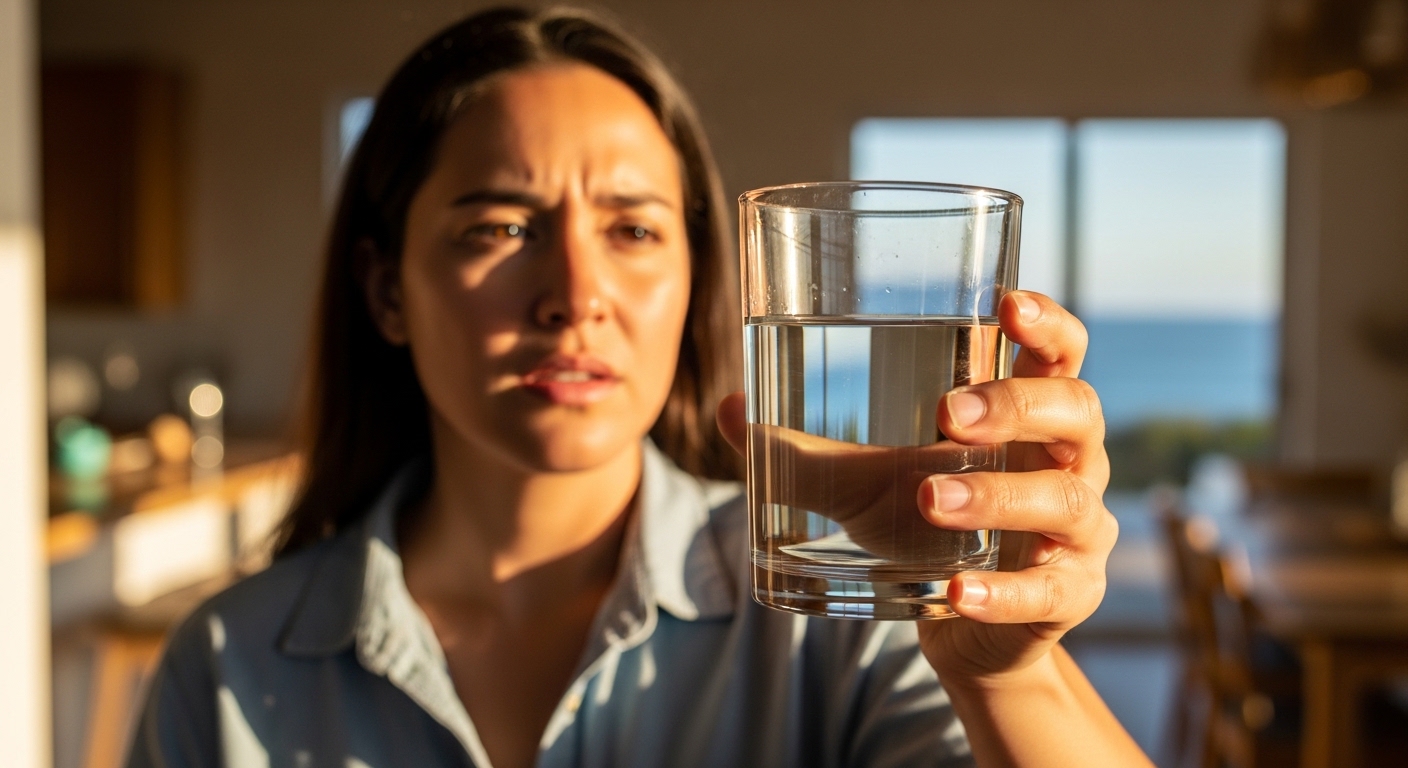

The most dangerous assumption homeowners in Baja make is that clear water is safe water. It isn’t — at least not necessarily. Bacterial contamination, heavy metals, and many dissolved chemicals are completely invisible. Water can look, smell, and taste perfectly fine and still contain coliform bacteria or elevated lead levels.
So how do you actually know? Here’s what to look for — and what the warning signs miss.
Signs That Something May Be Wrong
Smell
A chlorine smell means your municipal supply is treating the water — that’s actually a good sign at the street level. A rotten egg smell (hydrogen sulfide) indicates anaerobic bacterial activity, often in a cistern that isn’t cleaned regularly. A musty or earthy smell can indicate algae or organic matter in storage tanks.
Taste
Metallic taste can indicate copper or zinc from corroding pipes or fittings. Salty or bitter taste often correlates with high TDS. Any unusual taste change — especially sudden ones — warrants investigation.
Appearance
Cloudiness or turbidity means particles are suspended in the water. Orange or brown tint indicates iron or sediment. Blue-green staining on fixtures means copper is leaching from pipes, usually due to low pH or aggressive water chemistry.
Physical Effects
Skin irritation after showering, hair that feels coated or brittle, or scale buildup on fixtures faster than expected — these are signs of water chemistry that’s off, even if the water otherwise looks fine.
What the Signs Don’t Tell You
The problem with relying on sensory cues is that the most serious contamination is often undetectable without testing. Coliform bacteria — the primary indicator of fecal contamination — has no taste, no smell, and no color. E. coli contamination from a cracked cistern lid is completely invisible until someone gets sick.
The same is true for heavy metals. Lead, arsenic, and nitrates are odorless and tasteless at the concentrations typically found in residential water supplies. You won’t know they’re there without a test.
What a Proper Test Tells You
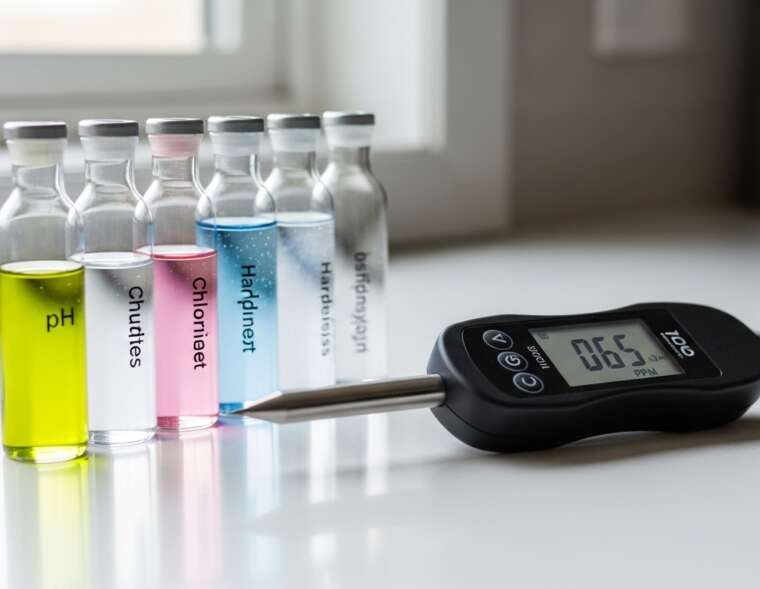
A field test at your property measures the parameters that matter most for Baja conditions: hardness, free and total chlorine, TDS, turbidity, UV transmittance, and a coliform screen. This takes about 45 minutes and gives you a factual baseline.
For homes where heavy metal or chemical contamination is a concern — near industrial areas, agricultural land, or older construction — a mail-in lab panel covering metals, VOCs, nitrates, and PFAS is also available and gives you a comprehensive picture.
The Short Answer
You don’t know if your water is safe until you test it. No amount of looking at it, smelling it, or tasting it replaces a measurement. In Baja, where water passes through cisterns and aging distribution infrastructure before reaching your tap, a test is the only reliable baseline.
If you’ve never had your water tested — or if it’s been more than a year since the last test — that’s where to start.