
Before we recommend any filtration system, we test. It’s the first step in our process and the one that separates a proper water solution from guesswork. But most homeowners have never had their water tested and aren’t sure what to expect.
Here’s exactly what we measure, how we measure it, and what the results tell us.
Where We Sample
A single sample from one tap doesn’t tell you much about your water quality. We take three samples at different points in the system: at the street feed where municipal water enters your property, at the cistern or tinaco outlet, and at the kitchen cold tap. This gives us a picture of how water quality changes as it moves through your system — and often pinpoints where a problem is being introduced.
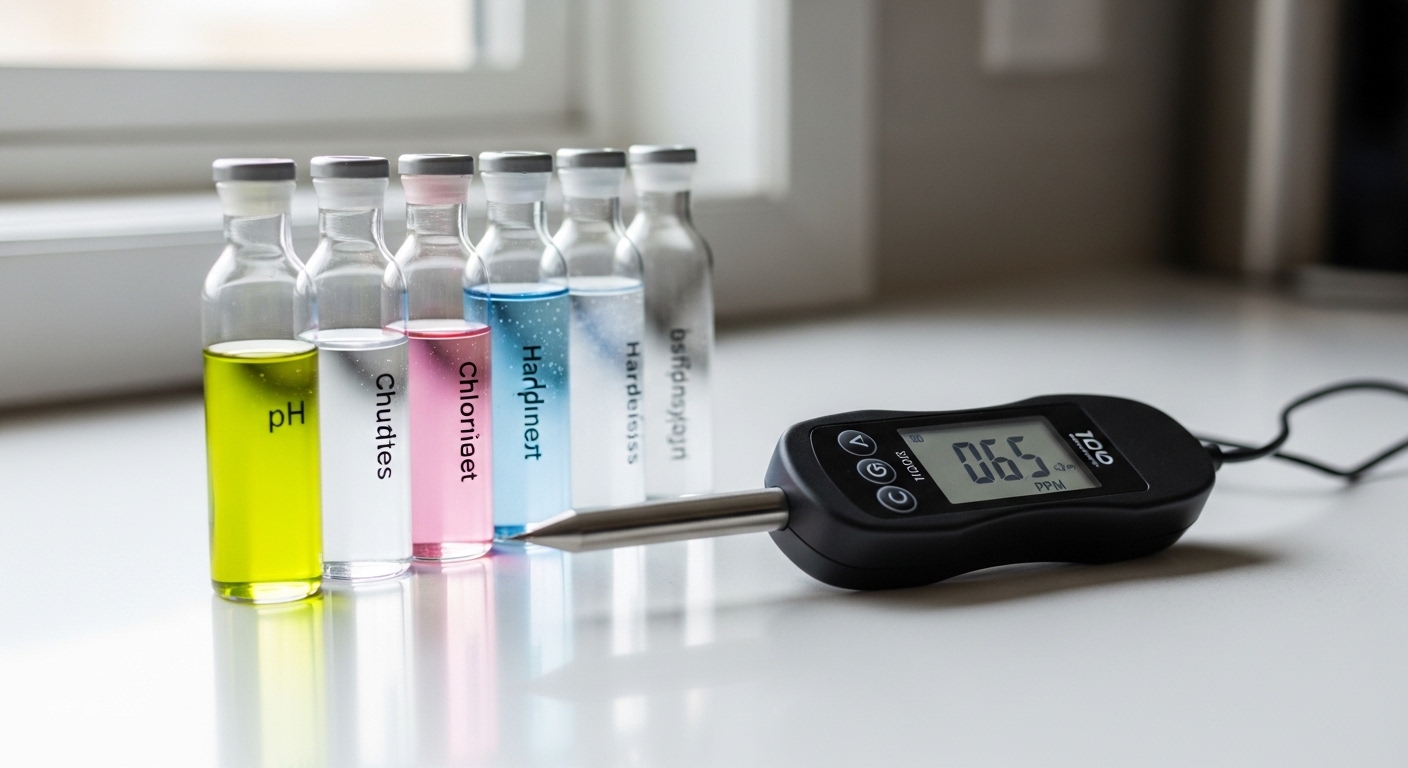
What We Test On-Site
Hardness
Measured in grains per gallon (GPG) or milligrams per liter. High hardness means elevated calcium and magnesium — the minerals that cause scale buildup in water heaters, showerheads, and appliances. Most Baja groundwater runs moderately hard.
Free and Total Chlorine
Free chlorine is what’s available to disinfect. Total chlorine includes chloramines — compounds formed when chlorine reacts with ammonia in water. We measure both. High levels mean effective municipal treatment but unpleasant taste and odor. Very low levels — especially after a cistern — can indicate insufficient disinfection.
TDS (Total Dissolved Solids)
Measured in parts per million, TDS is a fast indicator of overall dissolved content. High TDS doesn’t mean water is dangerous, but it correlates with taste issues and gives us a baseline to compare against RO output later.
Turbidity
How cloudy is the water? Turbidity is measured in NTU (Nephelometric Turbidity Units). This matters critically for UV sterilization — UV light can’t penetrate turbid water effectively, so turbidity above 1 NTU means we need additional filtration before the UV stage.
UV Transmittance (UVT)
This measures what percentage of UV light passes through your water at the wavelength used for sterilization. Low UVT means the UV dose reaching microorganisms is reduced. We size UV systems to deliver the required dose even at your measured UVT.
Coliform Screen
A rapid field test for the presence of coliform bacteria — the primary indicator of fecal contamination. A positive result means we need to trace the source and address it before any filtration system is sized.
What Happens With the Results
We review the results with you on the spot. The numbers drive the system design — which stages are needed, what flow rate to plan for, what UV dose is required. If your water is relatively clean and just needs taste and odor improvement, the system is simpler and less expensive. If there are bacterial concerns or high turbidity, the design changes accordingly.
The test takes about 45 minutes at your property. Everything after that is based on your actual water — not a generic recommendation.