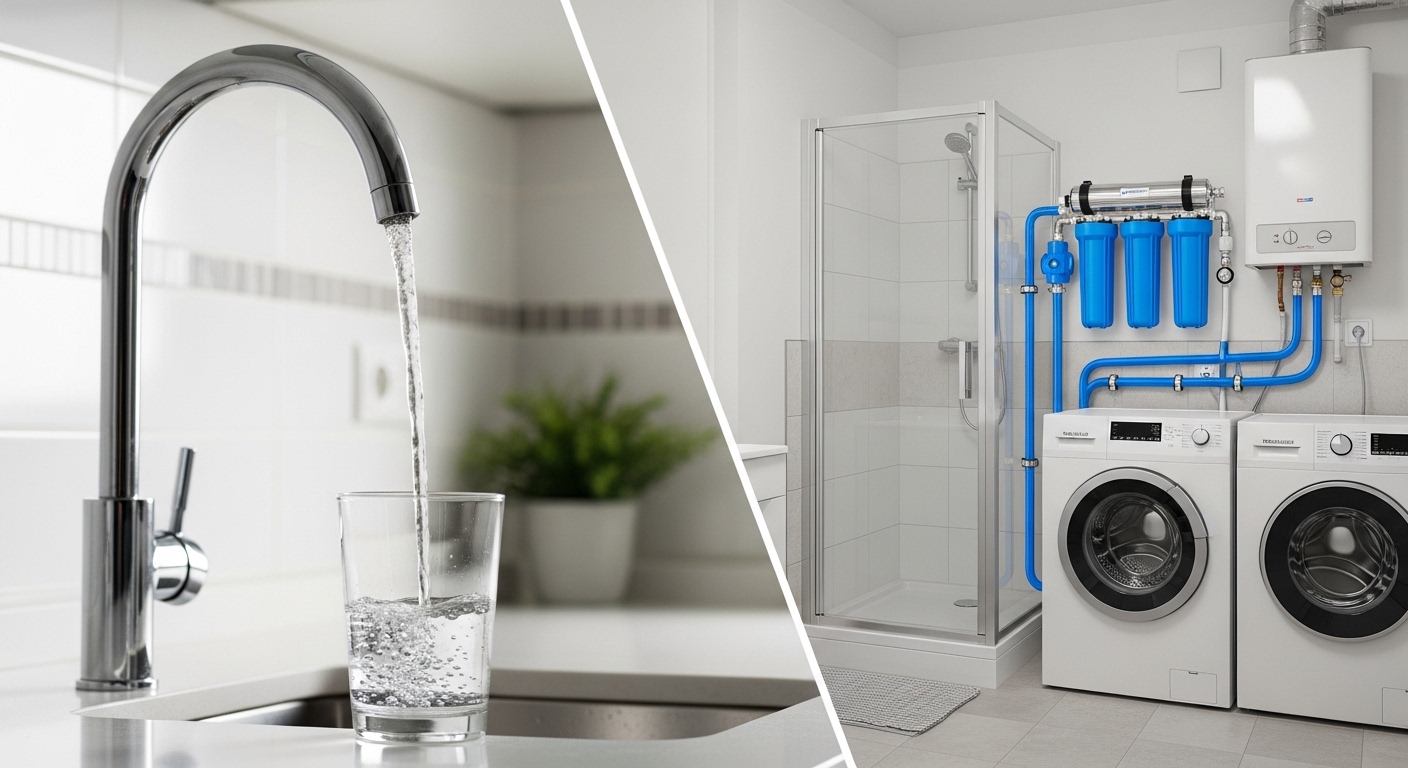

Not all water in your home needs to be treated the same way. The water you drink and cook with has different requirements than the water running your washing machine, flushing your toilets, or supplying your water heater. Understanding this distinction is the basis of every system we design.
What Is ‘Working Water’?
Working water is everything that isn’t going into your body or onto food contact surfaces. It runs through your plumbing, supplies your appliances, fills your toilet tank, flows through your showerhead, and exits through drains. The volume is significant — the vast majority of residential water use by gallons falls into this category.
Working water still benefits from filtration. Sediment damages valves and appliances. Chlorine degrades rubber seals and causes premature failure in water heaters and washing machine hoses. Hardness deposits scale on heating elements and reduces efficiency. But working water doesn’t need to meet drinking water standards.
What Is ‘Drinking Water’?
Drinking water includes everything you consume directly — from a glass, used in cooking, made into coffee or juice, or used to rinse produce. It’s a small fraction of your total water use by volume but the fraction where contamination has direct health consequences.
This is where the highest standard of filtration applies. Removing sediment and chlorine isn’t enough — dissolved solids, heavy metals, nitrates, and residual microorganisms all need to be addressed. That requires reverse osmosis.
How the Two Systems Work Together
Point of Entry: Whole-House Filtration
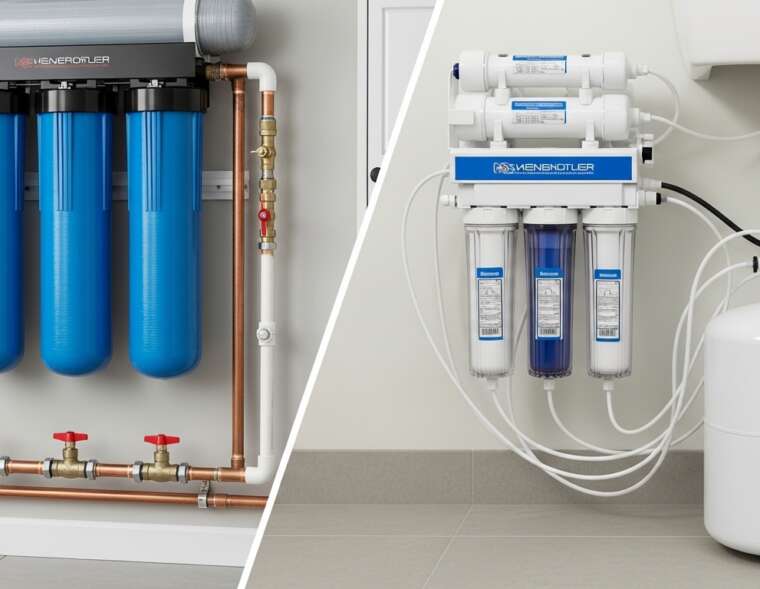
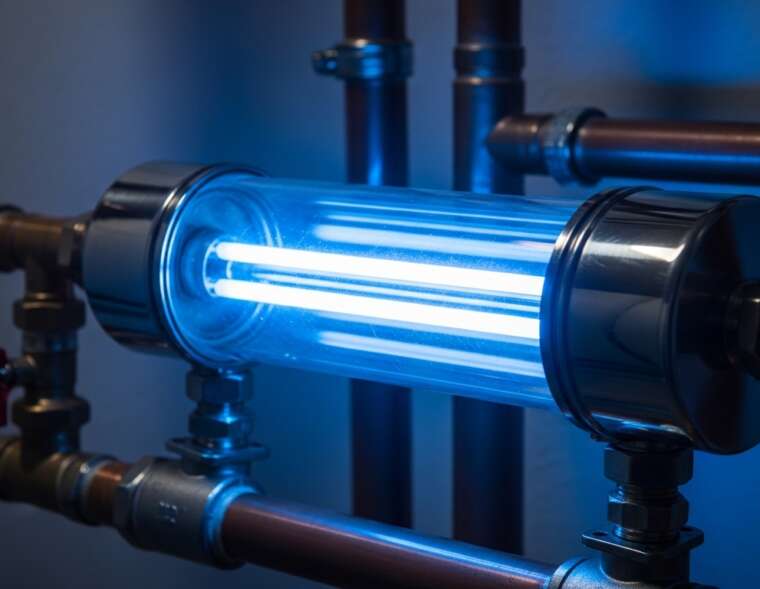
A whole-house system installs where water enters the home and treats everything. Sediment filtration removes particles. Catalytic carbon removes chlorine and chloramines. UV sterilization eliminates bacteria and viruses. All water in the house — working and drinking — is protected from these threats.
This protects your plumbing, extends appliance life, eliminates chlorine from showers and laundry, and ensures that microbiological safety isn’t dependent on cistern integrity alone.
Point of Use: Under-Sink RO
An RO system at the kitchen sink takes the already-treated water from the whole-house system and applies a much higher level of purification. The membrane removes dissolved solids, heavy metals, residual nitrates, fluoride, and most other compounds down to the molecular level. Output TDS drops from several hundred ppm to single digits.
This is the water you drink, cook with, and use for baby formula or medications. It’s produced slowly and stored in a small tank beneath the sink — the volume is limited but the quality is exceptional.
Can You Have One Without the Other?
Yes — and many clients start with one and add the other over time. An under-sink RO alone gives you excellent drinking water but doesn’t protect your plumbing or appliances. A whole-house system alone protects your infrastructure and removes chlorine but doesn’t achieve the dissolved-solids removal that RO provides for drinking water.
For most full-time residents in Rosarito, both systems together represent the most complete and cost-effective approach — which is why we offer bundled pricing for the combination.