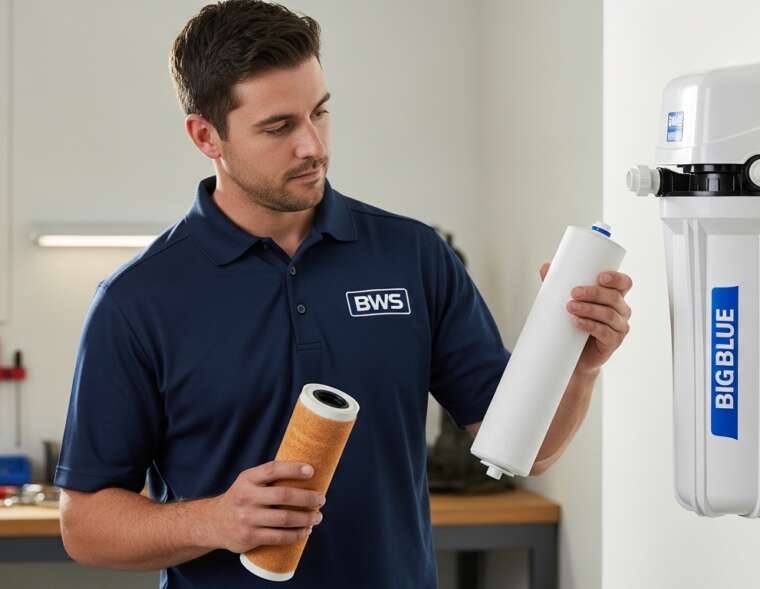
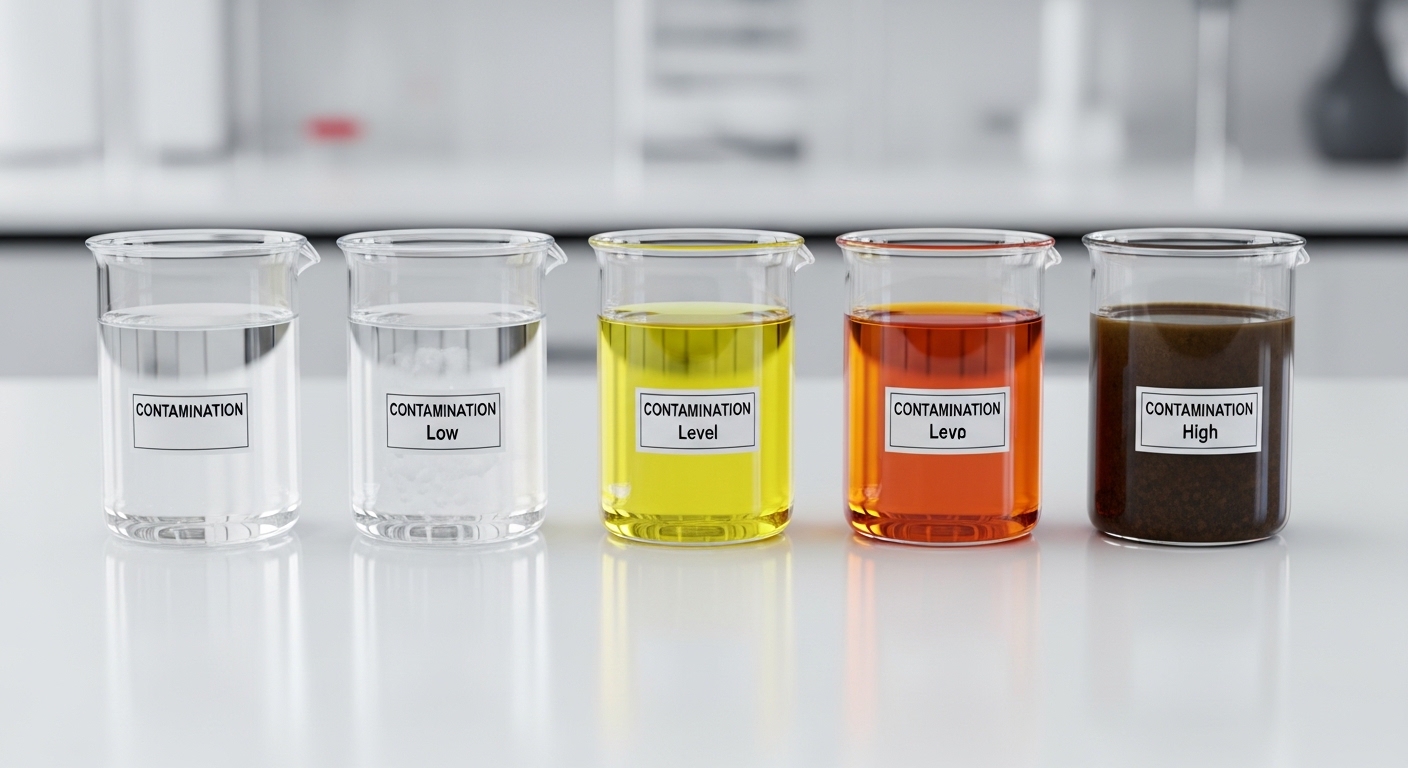

Baja California’s water supply draws from a mix of municipal treatment systems, underground aquifers, and local distribution networks that vary significantly in age and condition. What comes out of your tap is shaped by all of these factors — plus whatever happens inside your cistern or tinaco between the street feed and your faucet.
Here’s what we find in the water we test across Rosarito and surrounding areas, and what each contaminant means for your home and health.
Chlorine and Chloramines
Municipal water in Baja is treated with chlorine for disinfection. By the time it reaches your tap — especially after sitting in a cistern — free chlorine levels may have dropped significantly. What often remains are chloramines, compounds formed when chlorine reacts with naturally occurring ammonia in the water.
Chloramines are harder to remove than standard chlorine and require catalytic carbon rather than standard activated carbon. They don’t pose a significant health risk at typical municipal levels, but they contribute to taste and odor issues and can cause skin and eye irritation in sensitive individuals.
Sediment and Turbidity
Particles suspended in water — sand, silt, rust from aging pipes, or debris that enters a cistern — show up as turbidity. In Rosarito, sediment is one of the most consistent findings across properties we test, particularly in homes with older tinacos or those receiving water from pressure-variable municipal systems.
Beyond aesthetics, turbidity matters because it reduces the effectiveness of UV sterilization. Particles create shadows that shield microorganisms from UV exposure. This is why sediment filtration always comes first in a properly designed system.
Bacteria and Coliform
Coliform bacteria are the primary indicator used to evaluate microbial water quality. Their presence signals potential contamination from fecal matter — typically from a compromised cistern lid, roof debris washed into a rooftop tinaco during rain, or infrequent tank cleaning.
Total coliform includes a broad range of bacteria; E. coli specifically indicates fecal contamination and requires immediate action. We detect coliform with a field screening test at every water evaluation. When present, we identify the likely entry point before recommending any filtration solution.
Heavy Metals
Lead and copper are the most common heavy metals of concern in residential water. Lead typically enters water from older plumbing solder or fittings rather than the source water itself — a particular concern in homes built before modern plumbing standards. Copper leaches from copper pipes when water is acidic or has aggressive chemistry.
Neither has taste or odor at the concentrations typically found in homes. Detection requires a mail-in lab test. Reverse osmosis effectively removes both.
Hardness Minerals
Calcium and magnesium — the minerals that make water ‘hard’ — are present in virtually all Baja water at moderate to high levels. Hard water isn’t a health concern, but it accelerates scale formation in water heaters, RO membranes, UV lamp quartz sleeves, and appliances. It’s also the primary cause of the white deposits you see on fixtures and glassware.
TDS: The Summary Number
Total dissolved solids is a single number that captures the combined concentration of everything dissolved in your water — minerals, salts, metals, and other compounds. High TDS doesn’t mean water is dangerous, but it correlates with taste issues and is the first indicator that RO purification may be appropriate for drinking water.
A properly functioning RO membrane will reduce TDS from several hundred ppm to single digits. We check RO output TDS at every maintenance visit to confirm the membrane is performing correctly.